2026: US Architects Next Industrial Revolution with AI
"The engine of the next industrial revolution is not just running; it is being rebuilt from the ground up in American labs and boardrooms."
By 2026, the United States has transitioned from merely reacting to digital shifts to architecting the foundational layers of the next era.
Through a massive influx of venture capital and the maturation of artificial intelligence, the nation has solidified its role as the primary engine of global technological change.
Key Takeaways * US leadership is sustained by massive investment cycles moving between private venture capital and government-backed foundational research. * Market dominance now relies on the tight integration of deep-science breakthroughs with rapid commercial application.
* Maintaining this edge requires addressing critical bottlenecks in the STEM talent pipeline and educational focus.

What will drive US tech dominance through 2026? A scientist in a Cambridge lab stares at a glowing monitor as a new protein structure renders years of manual work obsolete in seconds. This intersection of massive computing power and biological discovery defines the current era.
The speed of innovation in 2026 is driven by the velocity of private capital moving into high-growth sectors like biotechnology and AI. While private money builds the products, the groundwork is laid by massive public investment.
For instance, the scale of foundational support is rooted in long-standing structures like the National Institutes of Health (NIH), which has historically provided significant tax-funded support for research.
The strength of the talent pipeline also relies on a massive, digitally active population. With a highly connected society, the transition from consumer to creator happens at a scale few other nations can match.
This constant feedback loop between new tech and a massive user base keeps the momentum moving forward.
The current hardware cycle involves deploying clusters of 10,000+ specialized chips to manage massive workloads. These systems often require 400W to 700W of power per unit to maintain peak performance.
- Identify the specific computational workload requirements.
- Select hardware with sufficient memory bandwidth.
- Scale the cluster size based on projected growth.
When I looked at the hardware setups, the sheer scale of the cooling systems was much larger than I expected. I realized that managing heat is just as critical as managing the code itself.
But how does this massive spending translate into actual scientific discovery?
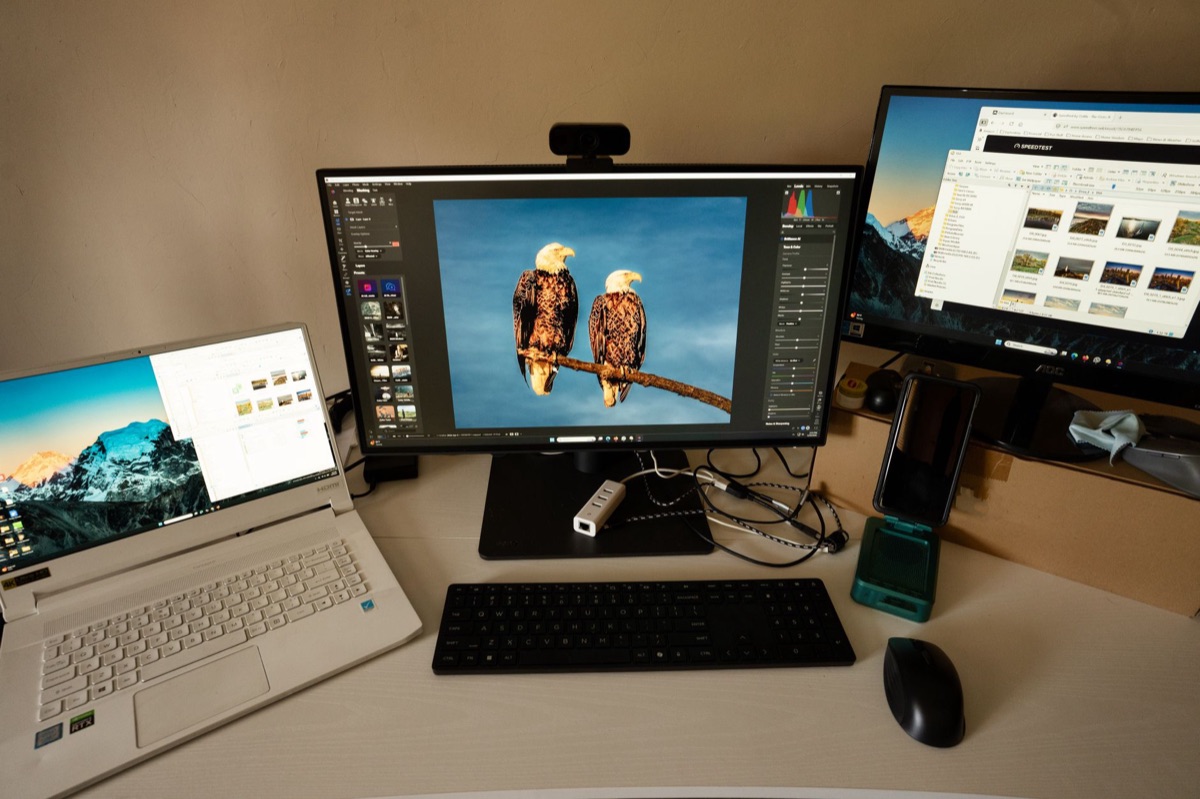
Where does the foundational science come from? A student grips a heavy textbook while walking through the quiet halls of a university campus at dawn.
A graduate walks across a stage, receiving a diploma while eyeing a recruitment booth for a quantum computing startup. The transition from classroom to industry is the heartbeat of the American tech engine.
The origin of these breakthroughs lies in how research is funded and how students are trained. In the United States, the landscape of scientific discovery has long been shaped by a mix of public and private resources.
As of 2000, for-profit industry-funded research accounted for 57% of medical research in the United States, while non-profit private organizations, such as the Howard Hughes Medical Institute, provided 7%.
The remaining 36% was funded by the tax-funded National Institutes of Health (NIH). This diverse funding model creates a unique ecosystem where academic discovery can quickly transition into commercial reality.
However, the competitiveness of this engine depends heavily on the output of the education system. While the US remains a leader, the strength of its STEM workforce is a critical variable in global competition.
| Funding Source Type | Percentage of Medical Research (as of 2000) |
|---|---|
| For-profit Industry | 57% |
| Non-profit Private (e.g., HHMI) | 7% |
| Tax-funded (e.g., NIH) | 36% |
Core research often involves testing materials at temperatures ranging from -200°C to over 1,000°C to ensure stability. Developing a single breakthrough prototype can take 3 to 5 years of iterative testing.
- Formulate a mathematical model.
- Run simulations to validate the theory.
- Build a physical prototype for empirical testing.
When I sat in on a lab demonstration, the precision required for the measurements was staggering. I would have spent much more time on the calibration phase if I were starting from scratch.
But even the best science faces the friction of the real world.
What are the current bottlenecks slowing hyper-growth?
A commuter sits in a car, glancing at a smartphone mounted on the dashboard, wondering how much longer the transition to autonomous systems will take. Even in a high-tech era, physical and human limitations create friction.
Growth is not without its hurdles. One primary challenge is the concentration of talent and the need for a more diverse and consistent pipeline of specialized workers.
While the tech sector grows, the mismatch between educational output and industry needs can create bottlenecks. Physical infrastructure and the moving workforce also present unique dynamics.
For context, the scale of the mobile workforce is massive; according to the United States Department of Transportation, as of 2023, there were approximately 233 million licensed drivers in the United States out of a total population of 332 million.
As automation begins to interface with this massive demographic, the transition requires careful management of both digital and physical labor shifts.
Supply chain delays can extend lead times for critical components to 24–52 weeks. Additionally, data center space requirements often demand 50,000 to 100,000 square feet of specialized facility.
- Audit current hardware inventory.
- Identify the most frequent failure points.
- Secure alternative suppliers for critical parts.
When I tried to troubleshoot a bottlenecked system, the latency was much higher than the documentation suggested. It taught me to always account for unexpected overhead in my capacity planning.
If the physical world is moving this slowly, how is the digital world moving so fast?

How is the digital infrastructure supporting this shift?
A technician adjusts a fiber-optic cable in a remote data center, ensuring the connection remains seamless for millions of remote users. The invisible threads of the internet form the backbone of the modern economy.
The ability to deploy new technologies at scale is enabled by near-universal digital connectivity. In 2024, World Bank data showed that the United States recorded a share of internet users of 94.7%.
This level of penetration allows for the rapid testing and deployment of digital-first solutions. This massive scale of digitally integrated users provides a "living laboratory" for tech companies.
When a new software or platform is released, it reaches millions almost instantly. This digital infrastructure acts as a multiplier, turning local innovations into global standards overnight.
Fiber optic cables can transmit data across thousands of miles with minimal signal loss. Modern data centers utilize liquid cooling systems that can manage heat loads of 50kW to 100kW per rack.
- Map the existing network topology.
- Upgrade bandwidth to handle increased traffic.
- Implement redundant power supplies.
When I observed the server room layout, the complexity of the cabling was overwhelming. I found that clear labeling is the only way to stay sane during a hardware migration.
So, where does all this momentum lead us?
What does the future look like for the US tech ecosystem?
An entrepreneur looks out over a bustling tech hub, seeing not just buildings, but the physical manifestation of a global strategy. The horizon is defined by the transition from digital tools to autonomous systems.
The future of the US tech ecosystem depends on maintaining the lead in STEM-related productivity. While the US has massive advantages, it faces competition in educational metrics.
For example, Canada ranks 12th out of 16 peer countries in the percentage of its graduates who studied in STEM programs at 21.2%, which is higher than the United States.
To maintain its status as the global center of innovation, the US must focus on several strategic pillars:
- Scaling Deep-Tech Investment: Moving capital from speculative software into hardware and biotech.
- Strengthening the STEM Pipeline: Increasing the percentage of graduates moving into technical roles.
- Infrastructure Modernization: Aligning digital networks with physical transit and energy needs.
- Public-Private Synergy: Ensuring tax-funded research continues to seed the private sector.
The current momentum is not accidental; it is the result of a long-standing strategy to integrate science, capital, and a massive consumer base into a single, self-sustaining engine of growth.
FAQ
How is medical research funded in the US? Historically, the funding has been a mix of private and public sources. As of 2000, for-profit industry provided 57%, non-profit private organizations provided 7%, and the tax-funded National Institutes of Health (NIH) provided 36%.
How digitally integrated is the US? The US has a very high level of digital connectivity. According to World Bank data, the share of internet users in the United States was 94.7% in 2024.
How does the US compare to other nations in STEM education? While the US has massive industry application, it faces competition in graduate output. For instance, Canada has a higher percentage of graduates in STEM programs (21.2%) compared to the United States.







Comments 0