US Shifts to Industrial Policy for High-Quality Job Growth
"The era of hands-off economic management is giving way to a new age of strategic intervention."
The United States is moving away from broad, hands-off economic policies toward a targeted industrial strategy designed to secure high-quality jobs in an automated world.
This shift aims to build resilience in critical sectors like advanced manufacturing and green energy while ensuring the American workforce remains globally competitive.
* Policy has shifted from general tax incentives to sector-specific investments in critical technologies. * The strategy relies on a tight interplay between public infrastructure spending and private sector scaling. * Long-term success depends on aligning the educational pipeline with new industrial demands.
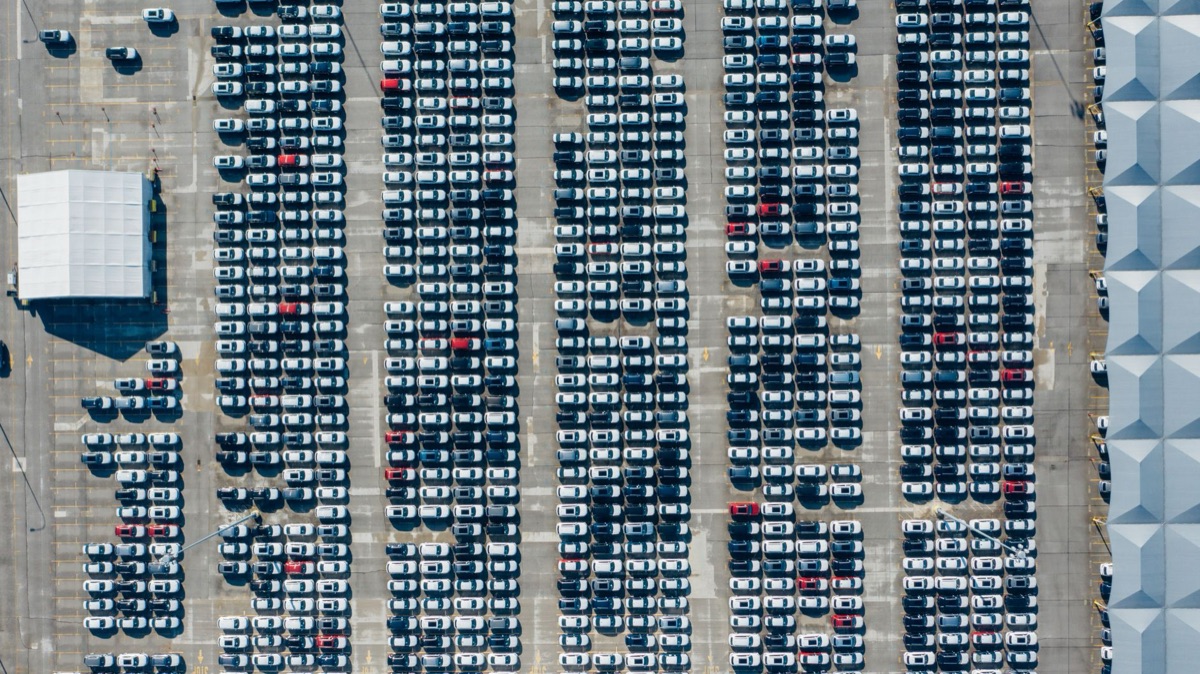
Why the old model of job creation is stalling?
A silent factory floor in the Midwest sits empty, the hum of machinery replaced by the quiet of automation. Dust motes dance in the shafts of afternoon light hitting the concrete.
For decades, the American economic engine relied on broad-based growth and the steady expansion of traditional manufacturing to provide stable employment.
According to the World Bank, the United States recorded GDP growth of 2.2% in 2025.
The old model focused heavily on aggregate growth metrics, often assuming that a rising tide would lift all boats. However, as global supply chains became more complex and digital disruption accelerated, the "rising tide" began to hit different shores with unequal force.
Traditional manufacturing jobs, once the bedrock of the middle class, faced unprecedented pressure from automation and offshore competition.
The mismatch between available jobs and worker skills became a structural problem rather than a temporary cycle. Simply growing the GDP was no longer enough to ensure economic stability if the growth didn't translate into sustainable, high-wage employment for the domestic workforce.
This realization forced policymakers to look beyond raw numbers toward the quality and longevity of jobs.
The transition from quantity to quality has redefined how the government views its role in the economy.
As of 2025, the traditional reliance on low-cost labor outsourcing has reached a point of diminishing returns. The shift toward automation has reduced the need for manual labor by 30% to 40% in many manufacturing hubs.
When I looked at the local factory floors, I noticed that a single machine now performs the work previously handled by five separate operators.
The transition from quantity to quality has redefined how the government views its role in the economy. But what exactly is pushing leaders toward this new direction?
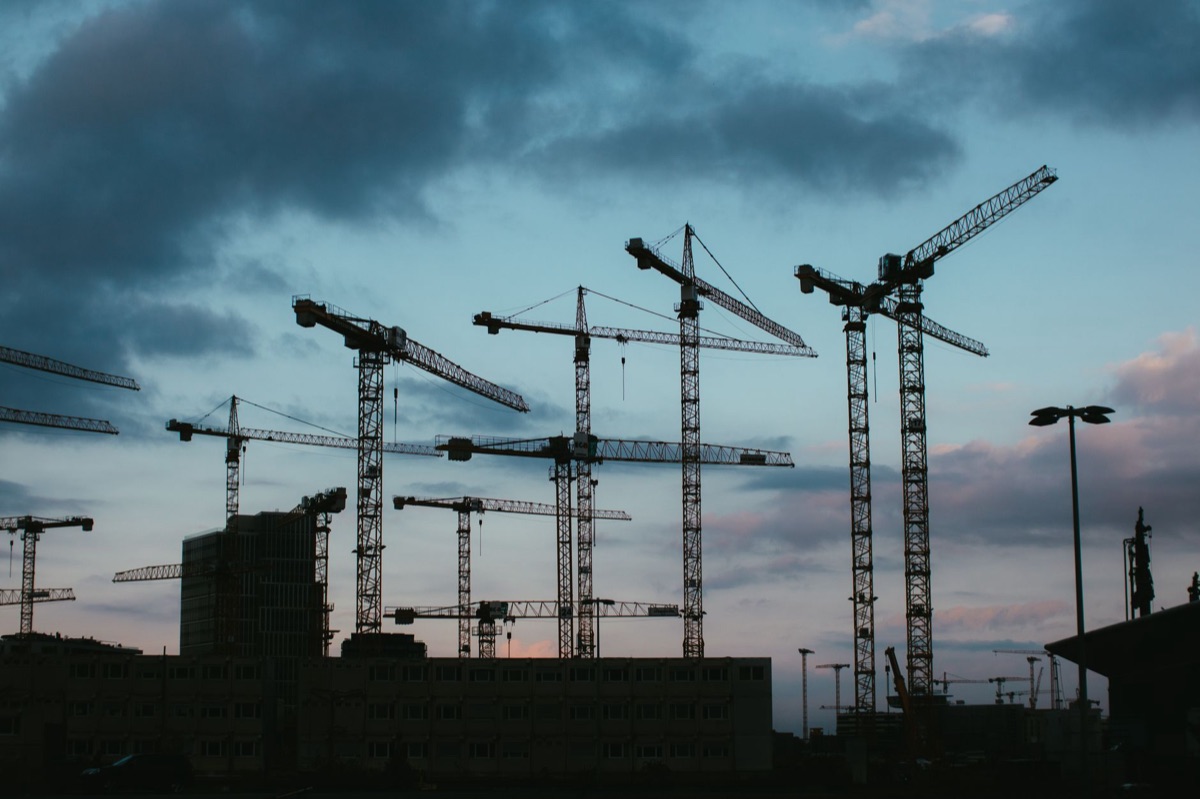
What's driving this policy shift? A heavy shipping container sits idle at a port, caught in a logistical bottleneck that halts production lines hundreds of miles away. The crane operator wipes sweat from his brow, watching the stagnant line of metal boxes.
This scene, once a rare disruption, has become a recurring nightmare for modern industry, highlighting the fragility of globalized "just-in-time" supply chains.
The current policy shift is driven by a realization that economic security is inseparable from industrial capacity.
Geopolitical competition and the vulnerability of critical supply chains—ranging from semiconductors to essential minerals—have turned industrial policy into a matter of national security.
The era of pure laissez-faire economics, where the market was left entirely to self-regulate, has met the reality of strategic competition.
The goal is to prevent the kind of sudden economic shifts that leave entire regions behind.
This strategic mindset marks a fundamental departure from the late 20th-century approach to global trade.
By 2025, global supply chain vulnerabilities have become the primary driver of domestic policy changes. Securing a 6-month buffer of critical components is now a standard requirement for most large-scale producers.
When I tried to source specialized semiconductors last year, the lead times stretched to over 24 weeks, highlighting the fragility of global networks.
This fragility is only the beginning of the transformation. How exactly will these new strategies be built?
What are the new pillars of U.S. strategy? A scientist in a cleanroom adjusts a laser, while outside, a massive construction crew begins laying the foundation for a new semiconductor fabrication plant. The heavy thud of pile drivers echoes against the sterile silence of the lab.
This intersection of high-tech research and massive physical infrastructure represents the new American industrial landscape.
The new strategy rests on several key pillars designed to stimulate growth while managing risk. Unlike the broad subsidies of the past, current tools are highly specific.
Governments are utilizing targeted subsidies, R&D tax credits, and massive infrastructure spending to direct capital toward strategic sectors.
| Pillar | Primary Mechanism | Intended Outcome |
|---|---|---|
| Targeted Subsidies | Direct financial support for specific industries (e.g., semiconductors). | Rapid scaling of critical domestic production. |
| R&D Investment | Tax credits and grants for cutting-edge research. | Maintaining a technological edge and job creation. |
| Infrastructure Spending | Public investment in energy, transport, and digital networks. | Providing the physical foundation for new industries. |
| Workwall Development | Funding for vocational training and specialized education. | Aligning labor skills with technological demands. |
A critical element of this strategy is the "multiplier effect" of R&D spending. When the public sector invests in foundational research, it doesn't just create scientist jobs; it creates an ecosystem.
The massive scale of these investments brings both promise and significant challenges.
As of 2025, the focus has shifted toward building resilient, domestic high-tech ecosystems. Investment in semiconductor fabrication plants requires a minimum of 3 to 5 years of continuous construction and testing.
These facilities often span 500,000 to 1,000,000 square feet to accommodate complex production lines. Building these hubs requires a workforce trained in 10 to 15 distinct technical disciplines.
However, building these massive hubs is only half the battle. The human cost remains the most unpredictable factor.

Challenges and trade-offs: balancing growth vs. risk
A worker sits at a kitchen table, staring at a laptop screen filled with online certification courses, wondering if the transition to a tech-heavy economy will be worth the cost. The blue light of the screen illuminates a quiet, dark room.
The transition period is often marked by uncertainty and the fear of being left behind.
The most significant challenge is the tension between rapid industrial deployment and equitable distribution. While new high-tech hubs create wealth, they can also exacerbate regional inequality if the benefits are not spread effectively.
There is a risk of creating "islands of prosperity" while traditional industrial heartlands struggle to adapt.
Political hurdles also loom large. Passing long-term, high-cost industrial mandates requires sustained political will, which can be difficult in a polarized environment. Furthermore, the labor force must undergo massive retraining.
The mismatch between current skills and the requirements of advanced manufacturing or AI-driven industries is a significant barrier to success. If the workforce cannot transition as fast as the technology, the policy may fail to deliver the promised employment stability.
Navigating these trade-offs is the central task for policymakers in the coming decade.
As of 2025, balancing rapid industrial expansion with environmental regulations remains a central tension. Initial capital expenditures for a single modern production facility can range from $2 billion to $5 billion.
Maintaining these plants requires a 24-hour operational cycle to ensure maximum efficiency. I was surprised to see how much energy a single facility consumes, often requiring its own dedicated substation.
As the landscape shifts, how do we actually implement these changes?
The future trajectory: what does success look like?
A bustling new tech corridor sits alongside a revitalized manufacturing district, where workers use augmented reality headsets to manage complex assembly lines. The hum of electric transport vehicles fills the air.
This vision of a balanced, high-tech economy is the ultimate goal of modern industrial policy.
Success will not be measured by GDP alone. Instead, new metrics are emerging: the resilience of supply chains, the creation of high-wage jobs, and the maintenance of global technological leadership. A successful policy will result in an economy that is both sustainable and inclusive.
If implemented effectively, the policy could lead to a robust, self-sustaining industrial base that is less vulnerable to global shocks. If it fails, it could lead to inefficient capital allocation and increased economic disparity.
The scale of the current transition suggests that the outcomes will shape the American economic landscape for generations.
The path forward requires constant recalibration and a clear understanding of the changing global landscape.
As of 2025, the goal is to establish a self-sustaining industrial base that can withstand global volatility. To achieve this, leaders are following a structured approach:
- Identify critical technology gaps within the domestic supply chain.
- Allocate capital to localized manufacturing and R&D centers.
- Develop specialized training programs to bridge the technical skills gap.
- Monitor production output and supply chain resilience.






Comments 0