High-Multiplier Jobs: New Focus for U.S. Manufacturing Base
"The era of hands-off economic management is giving way to a new age of strategic industrial steering."
The United States is moving away from broad, trickle-down economic models toward highly targeted industrial policies designed to secure supply chains and foster domestic job growth. This shift aims to rebuild the manufacturing base while ensuring technological leadership in critical sectors.
* Strategic Pivot: Moving from general growth to sector-specific interventions (semiconductors, green tech, etc.). * Employment Focus: Shifting the goal from mere job numbers to high-quality, resilient domestic employment. * R&D Dynamics: A massive transition in how research is funded, moving from heavy public reliance to private-sector dominance. * Economic Resilience: Using policy to mitigate geopolitical risks and supply chain vulnerabilities.
What's driving the shift in U.S. industrial policy? A silent transition began in the halls of policy institutes years ago, moving from the abstract mathematics of market efficiency to the concrete reality of factory floors.
For decades, the prevailing wisdom suggested that the government should simply maintain a stable environment and let the market decide where jobs go.
However, the landscape has changed. The modern driver is no longer just about maximizing efficiency, but about managing vulnerability. Global supply chain disruptions and the rise of intense geopolitical competition have made "just-in-time" efficiency secondary to "just-in-case" resilience.
Policymakers are now looking at the economy through the lens of national security. This means moving beyond the post-WWII model of general industrial expansion toward active steering.
Instead of hoping growth happens everywhere, the government is now incentivizing growth in specific, critical industries. This transition aims to prevent the hollowing out of the middle class by anchoring essential technologies within domestic borders.
The question remains: how does this strategic direction actually change the lives of workers on the ground?
How are policy changes translating into employment outcomes?
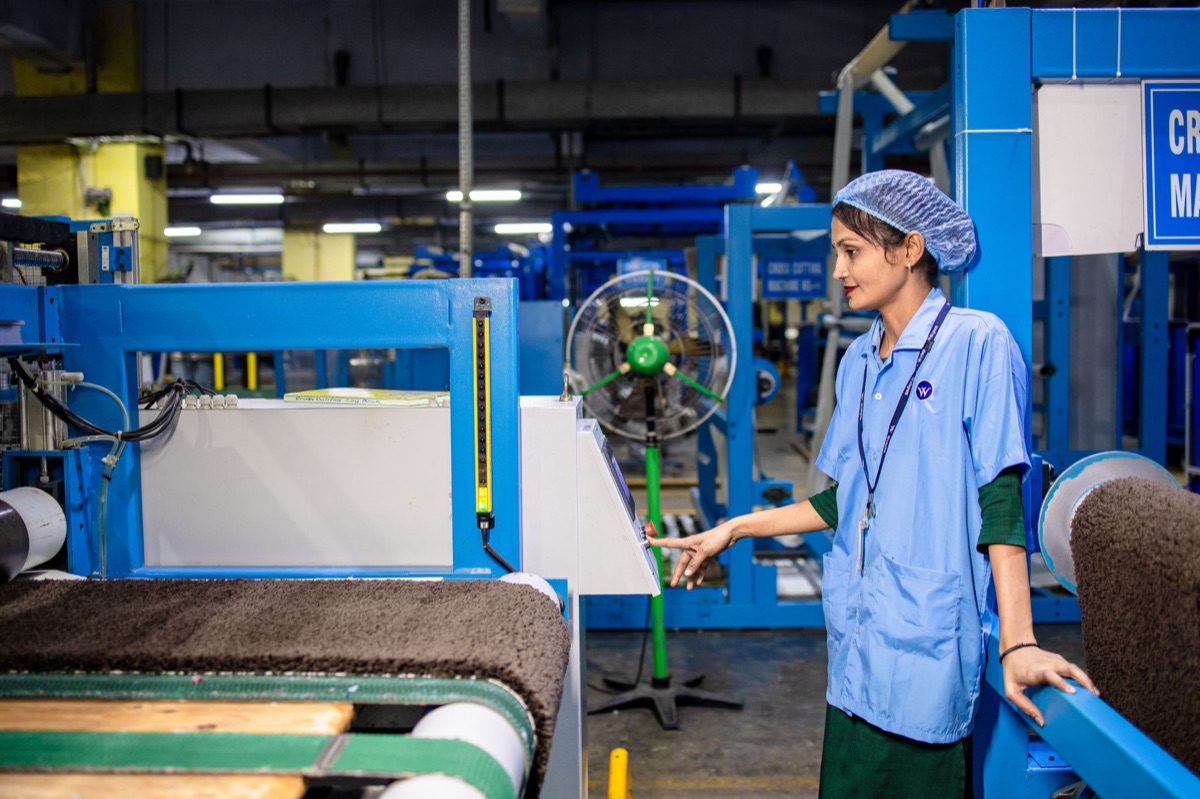
A worker stands at the entrance of a massive new semiconductor fabrication plant, looking at a facility that didn't exist five years ago. The sheer scale of the construction is massive, but the long-term question is whether these roles will provide the stability promised by the policy.
The current policy shift focuses on the distinction between job quantity and job quality. Traditional economic policy often celebrated any increase in employment, regardless of the sector.
Modern industrial policy, however, targets "high-multiplier" jobs—roles in advanced manufacturing that support secondary industries.
The goal is to create a virtuous cycle where domestic production creates local demand, which in turn stabilizes the local tax base. While some traditional manufacturing sectors may struggle under new regulatory or subsidy-driven environments, the targeted sectors are seeing an influx of capital.
The success of these policies will be measured not just by the number of new hires, but by the longevity and wage growth of these newly created roles.
As these new industries mature, the way they fund their own progress will become the next major battlefield.
How do public and private R&D dynamics work? A scientist sits in a laboratory, moving between a government-funded research station and a private corporate lab, illustrating the blurred lines of modern innovation. The history of how we discover new things has shifted from the public square to the private boardroom.
Historically, the government played a massive role in foundational research. In the year 2000, for-profit industry-funded research accounted for 57% of medical research in the United States, while non-profit private organizations, such as the Howard Hughes Medical Institute, provided 7%.
During that same period, the tax-funded National Institutes of Health (NIH) funded 36% of medical research.
The landscape shifted rapidly shortly thereafter. By 2003, the NIH's share of medical research funding had dropped to 28%. During the decade between 1994 and 2003, funding provided by private industry increased by 102%.
This massive surge in private capital has redefined the relationship between policy and progress.
Today, the government often acts as a catalyst rather than the primary financier. It provides the "seed" through grants and tax credits, but expects the private sector to drive the heavy lifting of commercialization.
This shift ensures that innovation is tied directly to market-ready products, though it also raises questions about the direction of research when profit becomes the primary driver.
This massive shift in funding is happening against a backdrop of significant macroeconomic shifts.

Macroeconomic context: U.S. economic strength and its foundations
A massive shipping terminal hums with activity, moving goods that represent the sheer scale of the American economy. Even as policy shifts, the underlying strength of the U.S. economy remains the bedrock upon which these new industrial strategies are built.
The U.S. remains a global economic titan. According to World Bank data, the United States recorded GDP growth of 2.2% in 2025. This steady growth provides the fiscal space necessary for the government to engage in industrial policy without destabilizing the broader economy.
The current strength is built on layers of history. The transition from an agrarian society to an industrial powerhouse provided the foundational growth that defined the 20th century.
Today, the engine has shifted toward services and high-tech, but consumer spending remains the most critical element of sustained growth.
The policy goal is to ensure that the "new" industrial economy—driven by tech and green energy—can support the same level of consumer-driven prosperity that the "old" industrial economy once provided.
Understanding this current strength requires looking back at the massive productivity leaps that defined previous eras.
Historical context: milestones in U.S. economic productivity
A vintage photograph of a bustling 1950s factory sits alongside a modern digital readout, showing how much the definition of "work" has itself changed. The massive leaps in productivity seen in the past are often the result of scientific and technological breakthroughs that transformed society.
In the mid-20th century, the U.S. experienced unprecedented productivity gains. These weren't just about moving faster; they were about moving smarter. Scientific advancements didn't just grow the economy; they fundamentally changed human life expectancy and quality.
For example, mortality from heart disease, which was the number-one killer in the United States, dropped 41 percent between 1971 and 1991. During that same period, the death rate for strokes decreased by 59 percent. Additionally, between 1991 and 1995, the cancer death rate fell by nearly 3 percent.
These improvements in public health are a form of "invisible" economic productivity. A healthier workforce is a more stable and productive workforce.
As modern industrial policy pushes for advancements in biotechnology and advanced manufacturing, it aims to replicate these massive societal gains, linking economic growth directly to improvements in human longevity and well-being.
| Era | Primary Economic Driver | Primary Funding Model |
|---|---|---|
| Post-WWII | Mass Manufacturing | Public-Private Hybrid |
| Late 20th Century | Service & Information | Market-Driven / Private |
| 2020s (Current) | Tech & Strategic Industry | Targeted Industrial Policy |
Summary of industrial policy evolution
- Shift in Objective: Moving from general growth to strategic sector dominance.
- Shift in Funding: Transitioning from heavy public R&D to private-sector-led innovation.
- Shift in Labor: Moving from low-skill mass employment to specialized, high-tech roles.
- Shift in Risk: Moving from "efficiency-first" to "resilience-first" supply chains.
FAQ
Q: What is the current scale of U.S. R&D spending relative to the economy? A: While specific current-year percentages vary by sector, the trend shows a massive increase in private-sector-led R&D, moving away from the heavy public-sector dominance seen in the late 20th century.
Q: How has the U.S. labor force composition changed historically? A: The workforce has transitioned from primarily agricultural and heavy industrial roles toward service, information, and now, highly specialized technological roles.
Q: What was the primary driver of U.S. economic output in the mid-20th century? A: The primary driver was massive productivity gains resulting from the transition to large-scale industrial manufacturing and significant technological advancements.
The transition toward a new industrial policy is not merely a change in tax code or subsidy structures; it is a fundamental rethinking of the social contract between the state, the private sector, and the American worker.
As the boundaries between technology, security, and employment continue to blur, the success of these policies will depend on how well they can turn strategic goals into sustainable, high-quality livelihoods.








Comments 0