Capital Meets Code: The Symbiosis of U.S. Innovation Paths
"The future is no longer being written in lines of code, but in the physical atoms of the machines we build."
The intersection of massive corporate capital and strategic government oversight is creating a new blueprint for American industry. As we move through 2026, the focus has shifted from digital optimization to the tangible mastery of hardware, energy, and advanced manufacturing.
Key Takeaways: * Innovation is shifting from pure software applications to deep-tech hardware and physical systems. * Large corporations are transitioning from service providers to integrated infrastructure architects.
* The balance between public research funding and private scaling is the decisive factor in global leadership. * Domestic manufacturing resilience is now a matter of national economic security.

The 2026 Horizon: Why is the focus shifting to atoms?
At 6:00 AM, a technician in a sterile cleanroom adjusts a single microscopic lens, knowing that a hair-thin error could ruin a million-dollar batch of processors. The quiet hum of the facility replaces the frantic clicking of keyboards that defined the previous decade.
As we look toward the future, we must consider how the industry earned about $9.5 billion in 2007, according to the ESA annual report.
The American economy has reached a critical inflection point where software-only solutions are hitting a ceiling of utility. To unlock the next level of productivity, the industry must master the hardware that runs the algorithms.
This transition requires a massive reallocation of capital toward deep-tech sectors like quantum computing and bio-manufacturing.
While venture capital continues to flow into high-growth startups, the scale of these new ambitions often exceeds the capacity of private equity alone. Historically, the relationship between public and private funding has shaped the trajectory of American science.
For instance, looking back at medical research trends, data shows that by 2003, private industry funding had increased 102% from 1994 levels, while the National Institutes of Health (NIH) share of funding had shifted to 28% of total medical research funding.
This shift mirrors the current movement toward high-stakes, capital-intensive technology. We are moving from an era of "app-based" growth to an era of "infrastructure-based" growth.
The question is no longer just about who has the best user interface, but who can build the most stable, scalable, and physically robust systems.
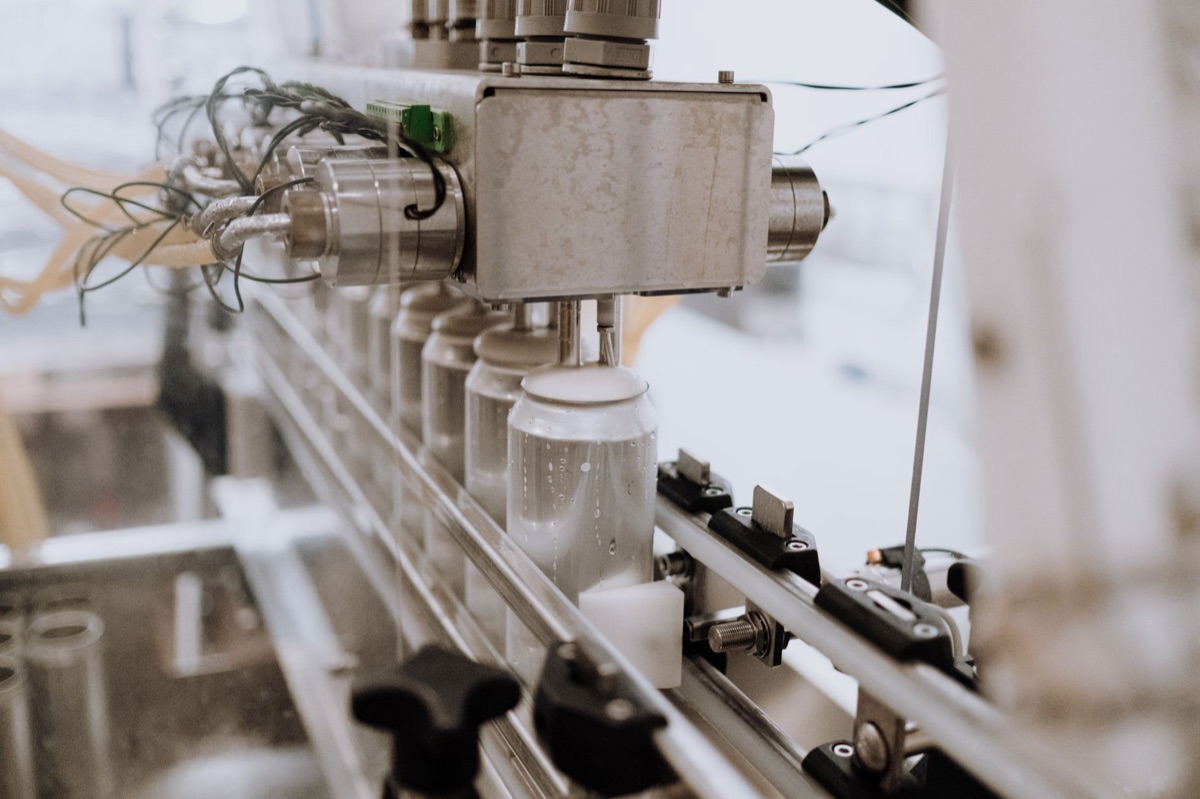
Is Big Tech becoming our new infrastructure? An executive sits in a high-rise boardroom at 8:00 PM, looking at a supply chain map that spans three continents and dozens of specialized fabrication plants. The conversation isn't about a new social media feature, but about the vertical integration of silicon production and energy management. The landscape of research has shifted significantly since 2000, when non-profit private organizations such as the Howard Hughes Medical Institute funded 7% of medical research in the United States.
Major corporations are no longer content to simply provide the software that runs on someone else's hardware. To maintain control over the speed of innovation, these giants are moving toward a model of total vertical integration.
They are building their own chips and designing their own data centers.
This move toward controlling the entire "stack" is a defensive necessity. As regulatory scrutiny increases, companies that own their infrastructure are better positioned to navigate shifting political landscapes.
They are transforming from mere service providers into the foundational architects of the digital and physical world.
However, this transition brings immense complexity. Managing a global hardware footprint requires a level of logistical precision that software-first companies were never designed to handle.
The leaders of 2026 are those who successfully bridge the gap between digital agility and industrial-scale reliability.
The Symbiosis: How do we balance government and private drive?
A researcher adjusts a microscope in a university lab at noon, knowing that the breakthrough they find today might not reach a factory floor for another decade. This gap between discovery and commercialization is where the tension between public and private interests is most visible.
As non-profit private organizations such as the Howard Hughes Medical Institute funded 7% of medical research in 2000, the balance between public and private sectors remains a critical consideration.
As of 2000, non-profit private organizations such as the Howard Hughes Medical Institute funded 7% of medical research in the United States. The lifecycle of innovation relies on a delicate handoff.
Initial, high-risk research often begins in academic or government-funded environments where the goal is fundamental understanding.
The transition from these early stages to market-ready products requires a massive injection of private capital.
In the early 2000s, the funding landscape for medical research showed that 57% was funded by for-profit industry, 7% by non-profit private organizations like the Howard Hughes Medical Institute, and 36% by tax-funded entities like the NIH.
This relationship is evolving as we tackle more complex problems. Government-funded research provides the foundational "science," while the private sector provides the "engine" for scaling.
If the government pulls back too much, the foundational research dries up; if the private sector cannot absorb that research, the innovations remain trapped in labs.
| Phase of Innovation | Primary Driver | Typical Goal | Risk Profile |
|---|---|---|---|
| Basic Research | Government/Public | Fundamental Discovery | Extremely High |
| Applied R&D | Universities/Private | Proof of Concept | High |
| Scaling/Production | Private Industry | Market Dominance | Moderate/Managed |

Is the hardware backbone actually secure? The rhythmic clatter of an automated assembly line echoes through a modern factory at midnight, where human workers act more as systems overseers than manual laborers.
This is not the manufacturing of the 20th century; it is a high-precision, data-driven environment where every movement is tracked by sensors.
The resurgence of advanced manufacturing is not just about bringing jobs back; it is about securing the hardware backbone of the future. Technologies like AI and quantum computing cannot exist without highly specialized, domestically produced components.
If the hardware is built elsewhere, the software-driven advantages of the nation are vulnerable to supply chain disruptions.
We are seeing a shift from simple assembly to "intelligent manufacturing." This involves embedding intellectual property directly into the manufacturing process itself. The goal is to create a domestic ecosystem where critical components can be produced reliably and at scale.
This domestic resilience is a strategic necessity. Controlling the supply chain for advanced components is now as important as controlling trade routes once were. The nations that lead in manufacturing complexity will define the economic boundaries of the next thirty years.
Navigating the Ecosystem: What are the key drivers for success?
A young engineer walks through a sprawling corporate campus at dawn, looking up at the massive cooling towers that power the local grid. They understand that their career will be defined by how well they integrate digital intelligence with these massive, physical systems.
Success in this new era requires more than just brilliant minds; it requires a stable ecosystem. This includes a skilled labor pipeline and policy stability that allows companies to make 20-year investments in hardware and infrastructure.
To accelerate this synergy, policymakers and industry leaders should follow a specific roadmap:
- Standardization of Interoperability: Establish and enforce hardware standards that allow for seamless integration across different manufacturers and platforms.
- Workforce Re-skilling: Create educational pipelines and vocational training that bridge the gap between traditional mechanical engineering and modern data science.
- Infrastructure Investment: Provide the necessary tax incentives and grants to build the massive power and data centers required for next-generation technology.
The complexity of these systems makes them harder to scale than software, but the barriers to entry create a significant competitive moat for those who succeed.
Global Competitiveness: What are the stakes of the 2026 benchmark?
A diplomat reviews a report on global trade flows at a desk in a quiet office, noting how a single breakthrough in semiconductor manufacturing can shift the balance of power between nations. Looking toward the future, the United States recorded GDP growth of 2.2% in 2025 according to the World Bank.
The data on the page represents more than just numbers; it represents the shifting gravity of global influence.
While that figure represents a specific sector, the principle of industrial value remains the same. The 2026 benchmark is a clear indicator of global standing.
Leadership in foundational technology stacks is the new metric of national power.
Falling behind in these sectors doesn't just mean economic loss; it means a loss of strategic autonomy. The economic fallout of failing to lead in these sectors is profound.
If a nation becomes a mere consumer of high-tech hardware developed elsewhere, its economy becomes subject to the whims of foreign supply chains and political shifts.
When I was looking at industrial growth charts recently, I noticed a recurring pattern: the shift from digital to physical always leaves the "software-only" players scrambling to catch up to the physical reality of the world.
FAQ
Will the shift to hardware mean a decline in the software industry? No, it means the software industry is moving into a more integrated phase where the code and the machine are inseparable.
Is domestic manufacturing actually viable in a globalized economy? It is becoming a necessity. The shift toward "intelligent manufacturing" allows for high-cost, high-value production that can compete globally.
How can individuals prepare for this shift? Focusing on the intersection of digital and physical skills—such as robotics, industrial IoT, and hardware-software integration—will be key.







Comments 0