2026 Tech Horizon: Reshaping U.S. Industry Structure Now
"The future is no longer a distant horizon; it is a deadline."
The United States is currently navigating a massive structural pivot, moving toward a 2026 inflection point where technological maturity meets industrial application. This transition aims to turn speculative innovation into the foundational engine of the American economy.
* Strategic Timeline: 2026 serves as the critical inflection point for achieving next-generation industrial competitiveness. * Core Drivers: Technology innovation and data liquidity are moving from secondary tools to the central nervous system of the modern economy. * Policy Focus: National strategy is shifting from sector-specific subsidies toward holistic digital infrastructure planning. * Global Imperative: Success depends on balancing domestic technological sovereignty with agile international partnerships.

What exactly is the '2026 Tech Horizon'? A scientist sits in a quiet laboratory in late 2025, watching a quantum processor stabilize for the first time in a multi-day run. Outside the window, the world continues its usual pace, unaware that the fundamental rules of computing are about to shift.
According to the World Bank, the United States recorded GDP growth of 2.2% in 2025.
The "2026 Tech Horizon" represents the transition from incremental improvements to paradigm-shifting capabilities. For years, digital transformation meant moving paper processes to screens.
Now, the horizon involves moving from software that assists humans to autonomous systems that manage complex industrial ecosystems.
This includes the maturation of quantum computing, which promises to solve optimization problems currently impossible for classical hardware, and the deployment of highly specialized AI models.
Data has emerged as the primary resource in this new era. It is no longer just about collecting information; it is about the speed of processing and the proprietary nature of massive datasets.
Companies that own the data used to train foundational models are gaining a massive lead over those merely using the tools. However, significant bottlenecks remain.
Current bandwidth capacities and the availability of specialized hardware, such as advanced semiconductors, must be scaled up significantly to meet the 2026 demands.

How is the Industrial Base Adapting to This Shift?
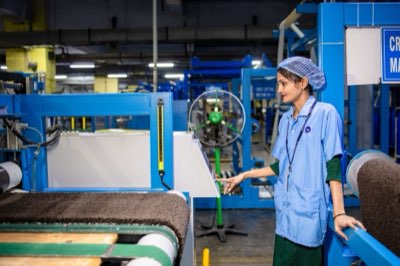
An automated factory floor hums with a rhythmic, synchronized precision that feels almost organic. There are no workers moving between machines; instead, technicians monitor a centralized digital twin on a tablet.
The industrial base is moving toward "deep digital integration." In advanced manufacturing, this looks like the integration of the Internet of Things (IoT) where every sensor feeds into a real-time optimization engine.
In biotechnology, it involves leveraging massive datasets to simulate drug interactions before a single physical test is conducted. This is not just about adding tech to a factory; it is about redesigning the factory around the tech.
This shift has created a massive talent pipeline crisis. There is a widening gap between the skills required to manage 2026-era technologies and the current capabilities of the workforce.
Companies are moving beyond a mere "digital presence" toward platform expansion, where the entire business model is built on a scalable digital architecture. This transition is difficult because it requires moving from human-led processes to human-on-the-loop management.
But the economic engine isn't the only thing changing; the rules of the game are being rewritten at the highest levels of government.
Will policy or the private sector drive the future? A policy analyst reviews decades of funding charts, noting how the massive influx of private capital has often outpaced the steady but slower trickle of federal grants.
As of 2000, non-profit private organizations such as the Howard Hughes Medical Institute funded 7% of medical research in the United States.
The role of the government is moving away from direct subsidies toward the creation of "regulatory sandboxes" and the funding of foundational research.
While the private sector moves with incredible velocity, driven by venture capital and market competition, the government focuses on the long-term infrastructure that makes private innovation possible.
To understand the scale of current investment, it is helpful to look at how research has been funded in the past.
For instance, as of 2000, for-profit industry-funded research accounted for 57% of medical research in the United States, while non-profit private organizations like the Howard Hughes Medical Institute provided 7%, and the tax-funded National Institutes of Health (NIH) provided 36%.
By 2003, the landscape shifted as NIH funding dropped to 28% while private industry funding increased by 102% from 1994 levels.
This historical trend highlights the current tension: the private sector drives the speed of innovation, but the public sector must provide the foundational stability and regulatory framework.
| Feature | Traditional Industrial Model | 2026 Tech-Driven Model |
|---|---|---|
| Primary Asset | Physical Capital (Machinery, Land) | Intellectual Capital (Data, Algorithms) |
| Growth Driver | Economies of Scale | Network Effects & Data Liquidity |
| Workforce Focus | Manual & Operational Skills | Analytical & System Management |
| Innovation Cycle | Long-term, Incremental | Rapid, Iterative |
This balance of power is not just domestic; it is the centerpiece of a global struggle for dominance.

Internationalization: The Global Race for Market Share
A diplomat meets with a group of tech executives in a secure briefing room, discussing how a single trade policy could reshape the global supply chain overnight.
Technological leadership is now inextricably linked to geopolitical influence. The race for 2026 is not just about who has the best tech, but who controls the supply chains required to build it. This has turned technological sovereignty into a core element of national security.
If a country loses its lead in foundational tech, it loses its ability to influence global standards and economic rules.
To manage these risks, the US is moving toward strategic alliance building. This involves joint R&D consortia and working with trusted international partners to set global standards.
The goal is to create a "high-standard" technological bloc that can compete globally while maintaining secure, resilient supply chains. The challenge lies in balancing this global strategy with the need to secure domestic manufacturing capabilities.
However, as the machines take over the heavy lifting, the most complicated variable remains the people behind the screens.
The Human Element: Navigating the Transitionary Phase
A worker sits at a kitchen table late at night, the glow of a smartphone illuminating a face that looks both connected and exhausted.
The transition to a tech-driven economy is not without human cost. As work becomes increasingly integrated with digital platforms, the boundaries between professional and personal life are blurring.
In a recent study, 70% of respondents said that since technology emerged, work has crept into their personal lives. This "always-on" culture is a significant side effect of the digital revolution.
The workforce faces a massive reskilling imperative. As automation handles more routine tasks, workers must transition into roles involving system oversight, data analysis, and complex problem-solving. This transition will not be seamless.
There will be winners and losers in the new economy, and the social contract may need to be rewritten to account for the displacement caused by rapid technological shifts.
When I look at the data, I often think about the sheer speed of this change. I remember sitting in a quiet office years ago, handling paperwork that would now be processed in milliseconds by an autonomous agent. It is disorienting to realize how much the ground has moved beneath us.
Summary of the 2026 Transition
- Shift in Assets: Move from prioritizing physical hardware to prioritizing data and algorithmic intelligence.
- Infrastructure Readiness: Address the hardware and bandwidth bottlenecks required to support massive AI and quantum workloads.
- Workforce Evolution: Bridge the skills gap through massive-scale reskilling and educational reform.
- Geopolitical Alignment: Secure supply chains through strategic international partnerships and domestic manufacturing.
- Regulatory Frameworks: Develop policies that encourage innovation while managing the risks of autonomous systems.
FAQ
How will the 2026 tech shift affect the average worker? The shift will likely change the nature of most jobs, moving tasks from manual or repetitive execution to system management and data-driven decision-making.
While some roles may be displaced, new roles in tech management and system oversight will emerge.
Why is 2026 being cited as a critical year? 2026 is viewed as a convergence point where current investments in AI, quantum computing, and data infrastructure are expected to reach a level of maturity where they can be fully integrated into the broader industrial economy.
What is the biggest risk to this transition? The primary risks include the widening skills gap in the workforce, potential disruptions in global supply chains, and the social impact of technology encroaching on personal life and job security.
The transition toward 2026 is not merely a technological upgrade; it is a fundamental restructuring of how value is created and distributed. Success will depend on how effectively the United States can synchronize private-sector speed with public-sector stability.







Comments 0