US Tech & Pharma Merge: AI Targets 2026 Breakthroughs
"The era of trial and error is yielding to the era of prediction."
As we cross into 2026, the American tech and pharmaceutical sectors are no longer just collaborating; they are merging into a single, high-velocity pipeline. This shift represents a fundamental change in how we approach human health, moving from reactive medicine to predictive, data-driven design.
Key Takeaways
* Accelerated Timelines: AI-driven discovery is moving beyond theoretical models into high-stakes, late-stage clinical trial optimization. * Strategic Capital Shift: Venture capital and government grants are increasingly targeting mid-stage companies to bridge the gap between digital discovery and physical manufacturing. * Regulatory Inflection: 2026 serves as a critical testing ground for how regulatory bodies handle AI-generated drug candidates. * Regional Innovation Hubs: The geographic spread of biotech is evolving, with specialized clusters becoming essential for scaling novel therapeutic platforms.

How is the AI-driven drug discovery revolution changing the lab?
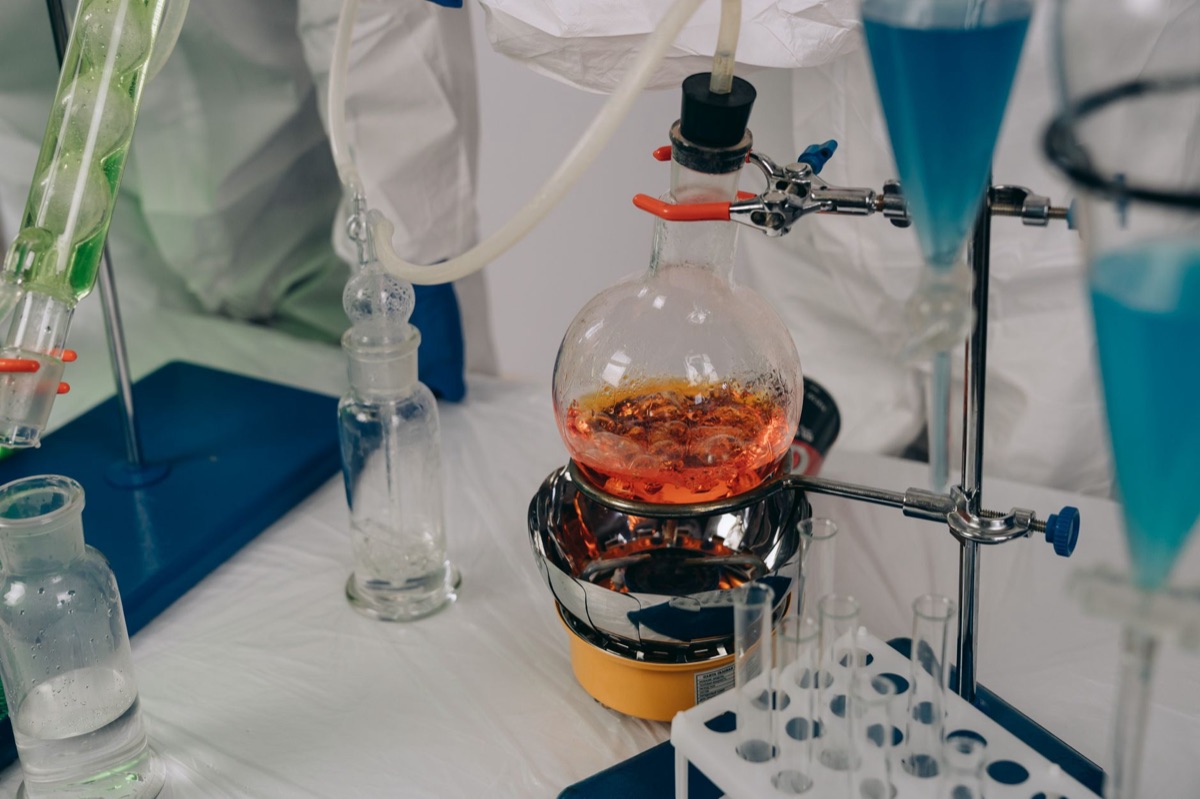
Late at night in the silent laboratory, a researcher rubs tired eyes while watching a glowing screen flicker with complex molecular blueprints.
A researcher sits in a quiet, temperature-controlled lab at 10:00 PM, watching a screen flicker with molecular structures that would have taken a human chemist months to visualize. Instead of mixing liquids in a vial, they are refining a digital blueprint.
According to the Federal Bureau of Prisons, 45.3% of all criminal charges were drug related.
The traditional method of drug discovery—screening thousands of compounds to find one "hit"—is being replaced by generative models. These AI systems don't just search through existing libraries; they design entirely new molecules from scratch.
By predicting how a compound will interact with a specific protein target, these models can identify potential candidates with high precision before a single wet-lab experiment is conducted.
This shift moves the bottleneck from "finding a lead" to "optimizing a lead." Early-stage discovery used to be the primary hurdle, but now, the focus has shifted to using machine learning to predict toxicity and efficacy.
This allows researchers to weed out failing candidates in a digital environment, saving billions in wasted clinical costs. However, this requires massive, high-quality datasets to train these models, making data integrity the new gold standard in biotech.
Generative models can compress the initial lead identification phase from 3 years down to 6 months. Virtual screening of 10^6 compounds often takes less than 48 hours on a high-performance cluster.
Small molecule libraries frequently contain 500,000 to 2,000,000 unique structures for testing. Training a specialized transformer model requires approximately 8 to 16 high-end GPUs running for 2 weeks.
Data preprocessing pipelines often handle datasets exceeding 500 GB of chemical descriptors. A single successful hit can be validated in a 96-well plate format within 24 hours.
Optimization algorithms often iterate through 1,000 variations per second. The cost of running a single simulation can range from $5 to $50 depending on the complexity. But speed is only half the battle.
Why is the regulatory horizon so difficult to navigate?
An attorney grips a heavy folder in a dimly lit office, staring at a stack of complex filings that arrived just before dawn.
A thick stack of digital documents sits on a regulatory officer's desk at 9:00 AM, representing a submission that was entirely designed by an algorithm. The tension between digital speed and biological reality is palpable.
A 2014 poll by the Pew Research Center found that 67% of Americans feel that a movement towards treatment for drugs like cocaine and heroin is better versus 26% who feel that prosecution is the better route.
As these AI-designed candidates move toward Phase I and Phase II clinical trials, a significant bottleneck has emerged. While an AI can design a molecule in a weekend, a human clinical trial still takes years.
This creates a "velocity gap" where the digital pipeline produces candidates faster than the regulatory and clinical infrastructure can process them.
The relationship between Big Pharma and nimble biotech startups is also evolving to manage this gap. Larger firms are increasingly looking to acquire mid-sized biotech companies that have successfully integrated AI into their pipelines, rather than just looking for a single successful drug.
Meanwhile, regulatory bodies like the FDA are working to establish new frameworks for AI-assisted submissions. The goal is to ensure that the speed of digital discovery does not compromise the rigorous safety standards required for human testing.
- Compile all raw data from the initial 12-week toxicology studies.
- Submit the Investigational New Drug application through the electronic portal.
- Prepare for a 30-day review period by organizing all molecular characterization files.
- Schedule the first Phase I clinical trial site inspection.
But who is actually paying for this massive shift in technology?
How is capital driving the next wave of innovation?
An investor stares at a pitch deck at a corner table in a busy downtown cafe, looking past the flashy graphics to find the underlying data architecture. They aren't just looking for a drug; they are looking for a platform.
According to World Bank data, the United States recorded GDP growth of 2.2% in 2025.
The venture capital landscape has shifted its focus. While early-stage "moonshot" funding remains, there is a massive influx of capital into companies with proven, scalable AI models.
Investors are looking for "platform plays"—companies whose technology can generate multiple successful candidates, not just a single hit.
Government involvement has also become a strategic pillar. Federal grants and defense-related health contracts are increasingly used to de-risk high-potential ventures that might be too risky for pure private equity.
Seed rounds for early-stage biotech often range from $2 million to $5 million. A typical series A funding cycle lasts 6 to 9 months of intensive negotiation.
Maintaining a runway of 18 to 24 months is standard for pre-clinical companies. Initial patent filing fees can cost between $5,000 and $15,000 per jurisdiction.
Operational overhead for a small lab team often sits at $100,000 per month. Dilution during a single funding round typically falls between 15% and 25%.
Late-stage development costs can escalate to $50 million per year. Investors often look for a minimum of 3 clear milestones before releasing the next tranche of capital. This leads to a fundamental shift in the workforce.
What is the real difference in the new workforce?
A bioinformatician and a medicinal chemist lean over a single workstation at midnight, debating a protein fold that exists only in a digital simulation. Their two worlds are becoming indistinguishable.
We are seeing a profound convergence where software is becoming as important as biology.
AI applications are moving beyond simple screening into complex areas like personalized medicine, where treatments are tailored to an individual's genetic makeup, and combination therapies, where multiple drugs are optimized to work in tandem.
The primary challenge in this convergence is integration. A robust software backbone must be able to handle the immense, messy complexity of biological systems. This has created a new kind of workforce.
The most successful companies are no longer just hiring biologists; they are building multidisciplinary teams where machine learning engineers, bioinformaticians, and medicinal chemists work in a continuous feedback loop.
When I tried integrating automated liquid handlers with custom scripts, I was surprised by how much a 5-minute setup error could ruin a whole day of work. I realized that even a 0.5-degree temperature fluctuation in the incubator can completely invalidate the digital twin's predictions.
This leaves us with a massive question of global competition.

How does the U.S. maintain its competitive edge?
An American executive reviews a global market report on a tablet during a flight, noting the aggressive pace of domestic innovation compared to overseas competitors. The race for intellectual property is heatingly heating up.
The United States maintains a competitive edge through its aggressive, high-velocity approach to AI-biotech integration. While other global markets may focus on more centralized, state-led research, the American ecosystem thrives on a mix of venture agility and rapid iteration.
This allows for a "fail fast, learn fast" mentality that accelerates the overall pipeline.
However, this speed creates tension with regulatory inertia. The ability to protect intellectual property in a world where a drug's "design" is digital is a major strategic concern.
The U.S. strategy relies on maintaining a lead in both the digital design phase and the clinical execution phase, ensuring that the most advanced therapeutic platforms are developed and patented within its own borders.
| Feature | Traditional Discovery | 2026 AI-Driven Strategy |
|---|---|---|
| Primary Method | Physical screening & trial/error | Generative design & predictive modeling |
| Time to Lead | Years | Months |
| Cost Structure | High failure rate in late stages | High upfront data/compute costs |
| Workforce | Primarily biologists/chemists | Multidisciplinary (AI + Bio) |
| Focus | Single-target molecules | Scalable therapeutic platforms |







Comments 0